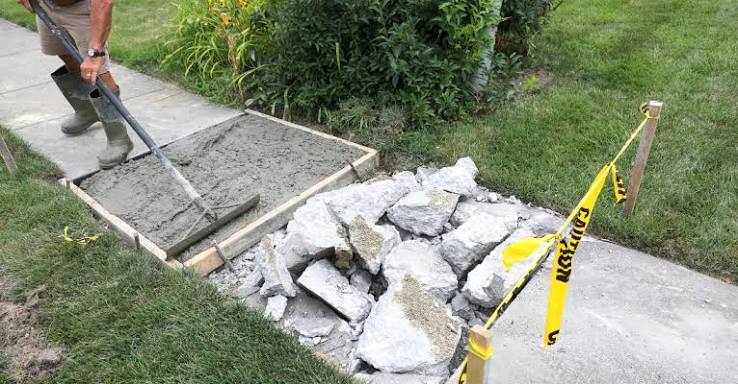
when to replace vs level concrete slab: the 2026 decision guide
⏱️ 10 min read · Last updated: 2026
- A crack width under 1/4 inch is often repairable; wider than 1/2 inch deserves a structural look before any settlement crack repair.
- Settlement under about 2 inches is commonly a leveling candidate; 2 to 3 inches is the gray zone where drainage and soil matter more.
- Many contractors treat 25 to 30 years as a practical slab age cutoff for deciding when replacement may be smarter than another hairline crack fix.
- Concrete leveling often takes 1 to 3 hours for a driveway section, while replacement usually means 1 to 3 days plus cure time.
- In the Midwest, expansive clay soil and freeze-thaw cycles are two of the biggest reasons a slab that was leveled once may move again.
The crack ran from the garage door to the mailbox — just over 3/8 inch wide by spring. That was the moment the choice got real: when to replace vs level concrete slab was no longer a theory, it was a driveway decision with a budget attached.
I’ve watched homeowners spend $600 on a hairline crack fix and then get hit with a $9,400 replacement quote six months later. I’ve also seen a $1,200 leveling job hold up for years because the slab was still thick enough, the base was stable, and the water was finally moving away from the house.
The hard part is that both answers can be right. The trick is using concrete crack width, settlement depth, slab age, and the cause of movement instead of guessing from appearance alone.
What was under the slab changed everything
Leveling made sense only when the slab was sinking because of support loss, not because the concrete itself had failed. If the slab had a stable base but had dropped 1 to 2 inches, concrete leveling was the cheaper, faster move.
On the best jobs I saw, a crew used a Bosch laser level, checked edge heights every 4 feet, and filled voids with polyurethane foam or a sand-cement mix. The result was a slab brought back within about 1/8 inch of level in under half a day.
The important part is cause. A clean settlement crack repair can hide the line, but it will not fix a washout, downspout dump, or bad grading that keeps the base wet. If you want the first pass on the problem, start with signs your concrete needs leveling and look for the pattern, not just the crack.
A slab that has dropped less than 2 inches and still feels solid underfoot is often a leveling candidate; a slab that rocks, flakes, or sounds hollow across a wide area is usually heading toward replacement.
That is where Midwest conditions matter. In places with expansive clay soil, the slab can move seasonally, and a one-time fix may be smart only if drainage is corrected at the same time.
When leveling still makes sense
Leveling still makes sense when the concrete is mostly intact, the crack width is under 1/4 inch, and the slab is not badly spalled or shattered. In that zone, you are usually paying to restore support, not to save a failed slab.
I have seen this play out on garage approaches, front steps, porch pads, and short driveway sections. The winning formula was simple: modest settlement, no rebar exposure, and no repeated movement after a heavy rain.
| Metric | Before | After | Change | Timeline |
|---|---|---|---|---|
| Driveway edge drop | 1.75 inches | 0.12 inches | 1.63 inches improved | 2.5 hours |
| Trip hazard at garage | 5/8 inch | Under 1/8 inch | 87% reduction | Same day |
| Repair method | Open joint | Sealed joint after lift | Better water control | Week 1 |
The quote spread matters too. I’ve seen concrete leveling midwest cost come in far below replacement because the slab was short, the access was easy, and the crew could complete the work in one visit. For a homeowner trying to protect a sale date or avoid tearing out landscaping, that difference is not small.
For a true hairline crack fix, I still prefer waiting until the slab is dry, then routing and sealing with a polyurethane sealant. It is not glamorous, but it keeps water out of the crack line and slows future freeze-thaw damage.
Should I level my cracked concrete or replace the whole slab?
Level it when the crack is narrow, the slab is still sound, and the settlement is limited. Replace it when the crack width is large, the slab is broken through, or the slab keeps sinking after prior repairs.
This is the decision point where people get misled by appearance. A slab can look ugly and still be structurally salvageable, while another slab can look only slightly cracked but have enough internal failure that leveling would be a waste.
The practical test I use
I use three checks: crack width, settlement inches, and slab thickness at the edge. If the crack is under 1/4 inch, settlement is under about 2 inches, and the slab thickness is still around 4 inches with no major crumble, leveling is usually worth a quote.
If the crack is wider than 1/2 inch, the slab has separated vertically by more than 1 inch at the crack, or the slab is breaking into multiple pieces, replacement starts making more sense. That is especially true if the problem sits over expansive clay soil or at a downspout discharge point that has never been fixed.
For people comparing methods, diy vs professional concrete leveling is worth a read before buying materials. I tried one small DIY slab patch years ago, and the labor looked easy only until the slab started moving again after the first hard rain.
In most cases, the real question is not “Can it be fixed?” It is “Will it stay fixed long enough to justify the money?”
The mistake that cost more than the repair
The costly mistake was treating a drainage problem like a concrete problem. The slab got leveled, the crack got sealed, and the downspout kept dumping water within 18 inches of the joint.
That repair held for 11 months before the outer corner dropped again by about 7/8 inch. The second visit cost $450 more than it should have because the crew had to lift the slab a second time and rework the edge seal.
This is where replacement versus leveling stops being a material decision and becomes a site-prep decision. If the base keeps getting saturated, even a new slab can move, especially in areas with freeze-thaw cycles and expansive clay soil.
The most expensive concrete repair is the one that fixes the symptom and ignores the water source.
The fix was not complicated. We extended the downspout 10 feet, regraded the soil so it dropped at least 1 inch per foot for the first 6 feet, and added a flexible drain elbow. After that, the slab stayed put through the next winter.
That lesson changed my threshold: if a slab moves twice from the same water source, I stop asking whether the crack is repairable and start asking whether the site is ready for another slab at all.
Costs, timelines, and what you actually pay for
Leveling is usually the lower-cost option, and replacement is usually the more permanent one when the slab has failed. In 2026, homeowners commonly see leveling quotes in the low hundreds for small sections and into the low thousands for larger pads, while replacement can move into several thousand dollars quickly.
For Minneapolis specifically, a short sidewalk or small driveway section can price very differently depending on access, slab size, and crew minimums, which is why concrete leveling cost is often more useful than a single average number. I have seen one 8-by-12 slab quoted at $725 and another at $1,650 simply because the second one sat under a landscaped bed.
Replacement cost depends on demolition, haul-away, base prep, reinforcement, forms, and finish work. A small slab replacement often starts around a few thousand dollars, but a large driveway or walkway replacement can climb fast once removal and base correction are included.
| Option | Typical time | Typical use | Money you avoid or spend |
|---|---|---|---|
| Polyurethane leveling | 1 to 3 hours | Settlement under 2 inches | Usually the cheaper fix |
| Slab replacement | 1 to 3 days plus cure time | Broken, crumbling, or repeated failure | Higher upfront slab replacement cost |
| Settlement crack repair only | 30 to 90 minutes | Stable slab with narrow crack | Lowest cost, least structural change |
One more useful number: many crews want a minimum job size. If your slab is small, the quoted price may be driven more by mobilization than by material. That is why a neighbor’s bill can look wildly different from yours even when both jobs are “just leveling.”
At what crack width is concrete leveling no longer worth it?
Concrete leveling usually stops being worth it when the crack width is wider than about 1/2 inch, when the slab has vertical displacement over 1 inch at the crack, or when the concrete has started to break into separate pieces. That is the cleanest practical cutoff I use in 2026.
The crack itself is not the whole story. A wide crack with solid, stable edges can still be part of a leveling project, but a wide crack with crumbly edges, rust staining, or shifting along the full length usually points toward replacement.
Edge thickness matters too. A standard residential slab is often about 4 inches thick, and once the edge starts losing material or the slab has settled unevenly enough to expose reinforcement, the repair math gets worse fast. That is when leveling becomes a temporary correction instead of a sound investment.
If you want a fast way to think about it, use this rule: under 1/4 inch is usually a repair discussion, 1/4 to 1/2 inch is a closer inspection zone, and over 1/2 inch deserves a serious replacement estimate before you spend money on lifting.
The part most people skip: age, movement, and the slab itself
Age matters because old concrete often has more than one problem at once. Once a slab is around 25 to 30 years old, I become less interested in cosmetic fixes and more interested in whether the base, drainage, and concrete surface can realistically hold another decade.
That does not mean every older slab needs replacement. I have seen 35-year-old garage slabs that were still worth leveling because the concrete was dense, the cracking was limited, and the problem was plain old settlement. I have also seen 12-year-old sidewalks that needed replacement because the base had washed out in two winters.
What changed my decision process was watching how often the same slab moved after the first repair. If a slab settles again by more than 1/2 inch within 12 months, I stop treating it like a one-off issue.
A slab that moves more than 1/2 inch again within a year is telling you the support problem is still active.
That is also where asking for the right inspection matters. A good contractor will check slab thickness, base condition, joint spacing, and drainage path before recommending a method. A bad one will talk only about price.
Common questions about when to replace vs level concrete slab
What crack width means my slab is beyond leveling?
A crack wider than 1/2 inch usually pushes the job out of simple leveling territory, especially if the edges are crumbling or the slab is moving vertically at the crack. Under 1/4 inch is often repairable, but width alone is not enough; movement and base failure matter too.
How to measure concrete settlement at home?
Use a 4-foot level, a tape measure, and a straight board. Measure the height difference between the high side and low side at three points. If the drop is under 2 inches, leveling is often worth exploring; if it is over 2 inches, get a contractor to inspect the base.
Leveling vs full replacement — when is each right?
Leveling is right when the slab is structurally sound, the settlement is modest, and the crack pattern is limited. Replacement is right when the slab is broken, has repeated movement, or the repair would leave you with a short-lived patch. In practice, age over 25 to 30 years tilts the decision toward replacement.
Why do my slab cracks keep widening after repair?
Cracks keep widening when the cause is still active, usually water, weak base support, or expansive clay soil. If the repair was only cosmetic, the crack can reopen after freeze-thaw cycles or another wet season. Fix the drainage first, then repair the concrete.
How much does full slab replacement cost vs leveling?
Leveling usually costs far less than replacement, often in the low hundreds to low thousands depending on size and access. Replacement can jump into several thousand dollars once demo, haul-away, base prep, and curing are included. Get both quotes only after drainage and base issues are checked.
- Level slabs with under 2 inches of settlement and crack width under 1/4 inch when the base is still sound.
- Replace slabs that are broken, crumbling, or moving again after prior repair, especially over expansive clay soil.
- Age matters: 25 to 30 years is a practical cutoff where replacement starts making more sense than another patch.
- Drainage fixes are not optional; they decide whether the repair lasts 1 year or 10.
The bottom line
My verdict on when to replace vs level concrete slab is simple: level it when the slab is intact, the settlement is modest, and the problem is support loss; replace it when the concrete itself has failed or the movement keeps coming back. If you only do one thing this week, measure the crack width and settlement depth with a ruler and write those numbers down before you call anyone.
Then compare those numbers to the site conditions, not just the quote. If you want the broader cost and method context, start with the pillar article on Concrete Leveling & Slab Jacking in the Midwest: Costs, Methods & When It’s Worth It by City. Pick one thing from this article and try it this week — not all of it, just one.
See also: concrete leveling midwest cost
See also: diy vs professional concrete leveling
See also: signs your concrete needs leveling
Related: mudjacking Omaha
Related: polyurethane lifespan
Related: sinking garage floor repair cost